Why book a surf camp in Indonesia?
A surf camp in Indonesia is the ultimate choice if you want to experience one of the world’s most iconic warm-water surf destinations. Made up of more than 17,000 islands across the Indian Ocean, Indonesia offers an incredible variety of waves and surf environments. It attracts surfers from around the world who want to progress on world-class reef breaks, improve their technique on consistent waves, or learn the fundamentals on beginner-friendly beaches.
Indonesia’s diverse islands allow you to choose a surf camp that matches your skill level, travel style, and preferred atmosphere. Bali offers a vibrant surf scene with approachable waves in areas like Canggu and legendary reef breaks around the Bukit Peninsula, including Padang Padang and Uluwatu. For a quieter island experience, Lombok provides uncrowded waves around Kuta Lombok, with beginner-friendly beaches and progressive surf spots such as Gerupuk and Selong Belanak. Advanced surfers can head to the Mentawai Islands for some of the world’s most famous and powerful reef waves.
Indonesian surf camps are designed for modern travelers seeking both surf and island experiences. Choose social, budget-friendly stays at surf hostels or open-air bamboo lodges, or upgrade to premium eco-resorts, cliffside villas, and surf and yoga retreats. Whether you are catching your first waves in warm tropical water or refining your technique on Indonesia’s famous reef breaks, the country offers exceptional surf conditions and unforgettable island living.
What to expect from a typical camp
-
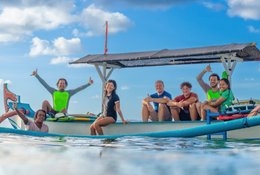
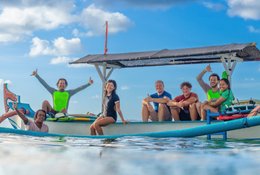
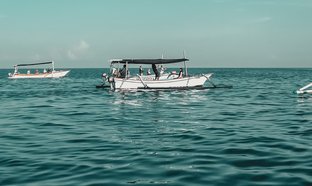
Early morning dawn patrols checking the reefs from a clifftop deck or boarding a traditional wooden outrigger boat (jukung) to glide out to the line-up before the afternoon trade winds arrive
-
Daily surf safaris led by highly qualified local guides and certified coaches who understand complex tidal variations, swell directions, and how to safely navigate reef entries
-
Blunt, highly tactical video analysis sessions back at the camp's open-air shala to visually break down your paddle positioning, stance width, and pop-up timing
-
Incredible regional fuel—think overflowing plates of fresh Nasi Goreng, healthy protein-packed Gado-Gado, tropical acai bowls, fresh mangoes, and ice-cold king coconuts engineered to sustain heavy double-session days
-
Cross-training and lifestyle side-quests, including smooth surf-skate training sessions on dedicated concrete bowls, exploring hidden jungle waterfalls, or temple walks
-
Laid-back afternoon downtime for cracking an ice-cold Bintang beer, booking a traditional Balinese deep-tissue muscle massage, or relaxing by an infinity pool with a global crew of travelers
-
A sun-aligned, high-vibe rhythm that effortlessly shifts from heavy water sessions to iconic rooftop sunset yoga flows and acoustic fires under the tropical stars
Common camp styles in Indonesia
-
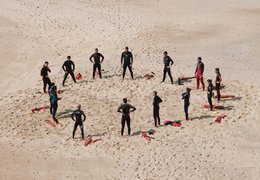
Beginner camps – technique-focused weeks covering ocean awareness, paddling skills, and building confidence on soft beach breaks or safe inside reef areas
-
Intermediate camps – specialized programs designed to help surfers progress beyond beach breaks by learning reef setups, channels, and safer wave positioning
-
Surf and yoga retreats – the quintessential Indonesian experience, combining surf sessions with restorative Vinyasa or Yin yoga flows in open-air bamboo pavilions
-
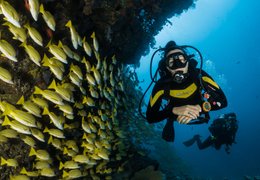
Surf and diving packages – multi-sport programs combining surf coaching with PADI/SSI scuba diving or freediving to explore Indonesia’s diverse marine environments
Best time to visit and swell seasons
Indonesia delivers warm water and waves all year long, but the country operates on two distinct weather and wind seasons that completely dictate where you should book your camp.
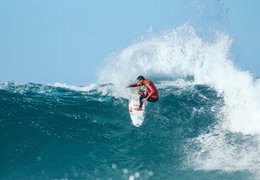
The Dry Season (April to October) is the classic, high-octane peak window for Indonesian surf. This is when the Southern Hemisphere winter fires up heavy, highly consistent groundswells up from the Indian Ocean, met by steady southeast trade winds. This creates flawless, glassy, offshore conditions along the southwest-facing coasts of Bali (the Bukit), Lombok, Java, and the Mentawais. It is prime time for intermediates looking to progress quickly and advanced surfers hunting world-class walls.
If you want to avoid the main crowds, score cheaper rates, or are a beginner looking for mellower conditions, the Wet Season (November to March) is a fantastic option. As the winds flip to the northwest, the focus shifts to the east coast of the islands (such as Sanur or Keramas in Bali, and sheltered bays in Lombok). The waves during this rainy season turn into playful, highly manageable beach and reef rollers—perfect for learning foundational mechanics in warm water without the intimidation of heavy peak-season swells.
 Indonesia











 Poland
 Italy
 United Kingdom